
Overview In this blog we will learn how to use and control a DC motor, by using a transistor, and diode. We will also use a potentiometer to control the speed of the motor. Please click here to learn how to use a potentiometer. Components needed DC motor Transistor Diode Resistor Potentiometer Jumper cables Arduino … Continue reading DC Motor
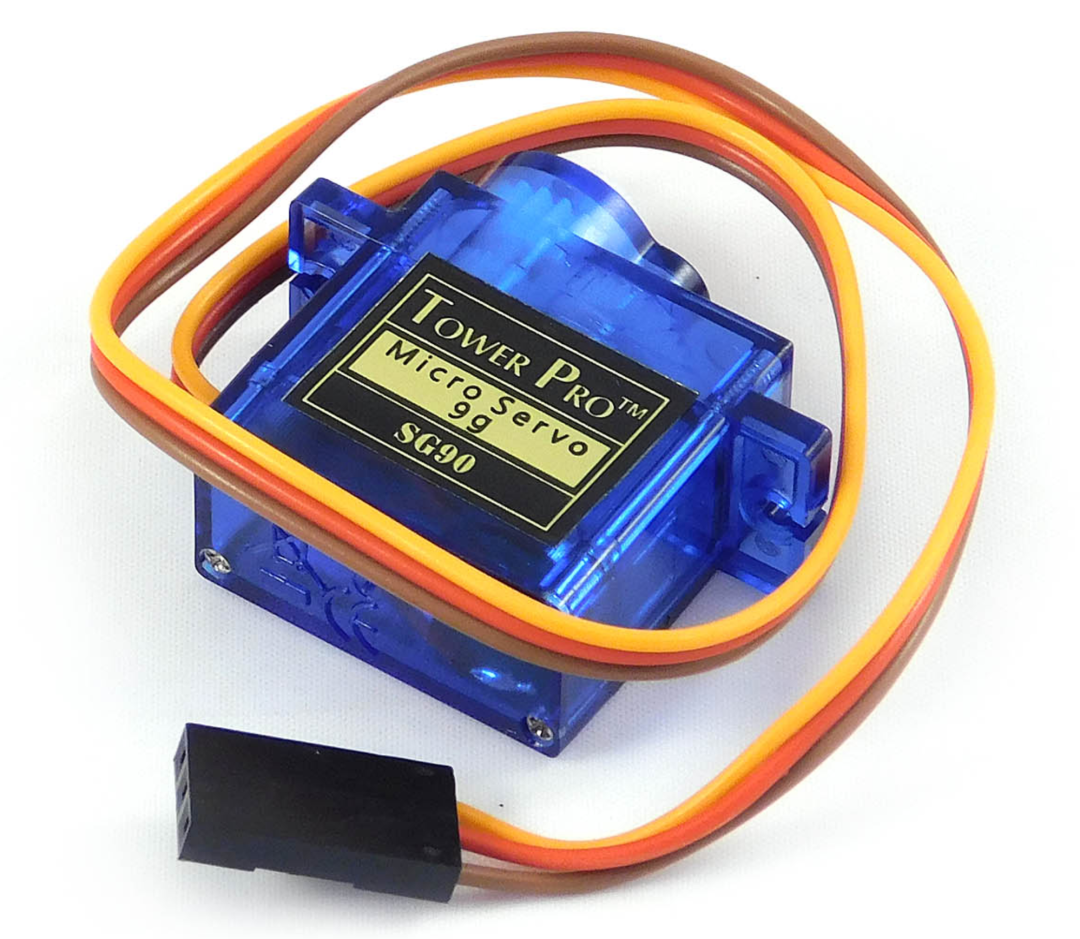
Servo Motor
What is a servo motor? The servo motor is a special motor that you can rotate with a precision. It can be used to build remote control toys, etc. It is built in with several parts like a control circuit, servo motor, shaft, potentiometer, drive gears, an amplifier, and an encoder. The output shaft of … Continue reading Servo Motor

Shift Register controlling brightness
In my earlier blog, we learned about the 74HC595 shift register. In that blog we learned to connect LEDs to all output pins of shift register. As we know that all those connected LEDs had full brightness. In this blog, we will learn how to control the brightness of those LEDs. To control the brightness … Continue reading Shift Register controlling brightness

Security System using an Ultrasonic Sensor HC-SR04
Components needed Ultrasonic Sensor Piezo(buzzer) An LED A resistor Jumper cables Breadboard Arduino Board A computer with the Arduino IDE installed Completed Circuit The image above is the completed circuit for the security system. We will build a simple security system using an ultrasonic sensor where if something is stolen, the piezo (buzzer) will buzz … Continue reading Security System using an Ultrasonic Sensor HC-SR04

74HC595 Shift Register
What is a shift register? When should we use it? A shift register is an Integrated Circuit (IC), which allows us to expand the number of pins we can use on our Arduino Board (in fact, any micro-controller). So far we learned about many different components and sensors like an LED, buzzer, RGB LED, DHT11 … Continue reading 74HC595 Shift Register

Temperature and Humidity Sensor (DHT11)
Components needed DHT11 Sensor Jumper cables A breadboard An Arduino Board A computer with the Arduino IDE installed Completed Circuit The Program #include <DHT.h> #include <DHT_U.h> DHT dht(2, DHT11); float tempInCelcius; float tempInFarenheit; float humidity; void setup() { Serial.begin(9600); Serial.println("Humidity and Temperature Sensor Program"); dht.begin(); } void loop() { delay(2000); tempInCelcius=dht.readTemperature(); humidity=dht.readHumidity(); tempInFarenheit=tempInCelcius*9/5+32; Serial.print("Humidity = … Continue reading Temperature and Humidity Sensor (DHT11)
 Arduino and AI